
LAN Network: Definition, Types, Comparison, Router and Internet Explained
We explain what a LAN is and the different types of networks that exist. In this article, we also explain what a router is and how it works, and what the internet is.
What Is a LAN Network?
A LAN (Local Area Network) is a computer network whose scope is limited to a small physical space, such as a house, an apartment or at most a building.
Through a LAN network, resources can be shared between several computers and computing devices (such as cell phones, tablets, etc.), such as peripherals (printers, projectors, etc.), information stored on the server (or on connected computers) and even Internet access points, despite being in different rooms or even floors.
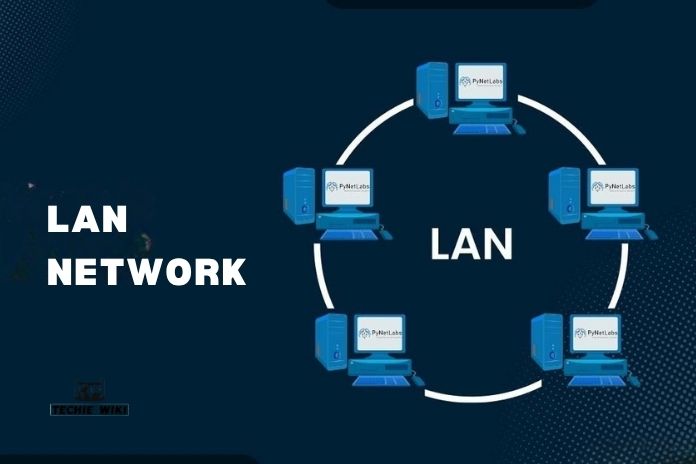
These types of networks are commonly used in businesses, companies, and homes, and can have different network topologies depending on the specific needs of the network, such as:
- Bus Network: In which a single cable (or backbone) connects the computers and allows the transmission of data in a straight line, making it simple but susceptible to cable damage or traffic interruption.
- Star Network: In which all computers connect to a central server that manages network resources and allocates them as requested.
- Ring Network: In which all computers are connected to their neighbors through unidirectional transmission, which interrupts the network if there is a failure at any level of it.
- Mixed Network: Combines two or more of the above models.
Types of Networks
Computer networks are generally classified based on their physical or geographical scope, which usually reflects their power or data volume. In this sense, we can speak of:
LANs (Local Area Networks)
Local area networks that cover specific, limited areas, such as a house, an office, or at most a few floors within a building. They are common in businesses, schools, companies, etc.
Metropolitan Area Networks (MANs)
Metropolitan area networks have a scope larger than local but not international. Examples include university campus networks or networks connecting multiple government agencies within a city.
WANs (Wide Area Networks)
Wide area networks that cross vast geographical regions, and can be national or international, like the Internet itself.
Comparison of Different Types of Computer Networks
| Network Type | Full Form | Coverage Area | Common Uses |
| LAN | Local Area Network | LAN covers small areas such as homes, offices, and buildings etc. | LAN is used to connect computers, printers, and devices within a limited location. |
| MAN | Metropolitan Area Network | MAN Covers a city or large campus area. | MAN connects multiple buildings, campuses, or organizations within a city. |
| WAN | Wide Area Network | WAN covers large geographical areas, including countries and continents. | WAN connects networks across long distances, such as the Internet. |
What Is a Router?
A router is a device that connects different networks and transfers data between them. Routers analyse the source and destination of data packets and determine the best route. Managing data traffic, a router enables devices to communicate with each other and access network services and the Internet. Packet forwarding and packet routing are the two main functions involved in this process.
Packet Forwarding
The router receives packets and forwards them back to the appropriate exit point as determined by the routing table, an electronic document that contains the routes to the various nodes in the network.
Packet Routing
Using routing algorithms, it determines the path that packets should follow as they flow from a sender to a receiver.
What Is The Internet?
The Internet is a WAN network composed of a specialized set of computer networks interconnected through the TCP/IP protocol suite, thus achieving a global and massive reach.
This network dates back to the mid-20th century, when ARPANET was established, a precursor that initially connected four nodes in American institutions, but since then it has grown enormously to become the network of networks, one of the most important communication networks in the world.
Among its services, one of the best-known is the World Wide Web (WWW): a set of protocols that allow remote access to hypertext and the sharing of vast amounts of information. This service was created in 1990, and it is not the only one that the Internet is currently capable of supporting.
Also Read: How To Increase Internet Speed On Mobile?
