
How 5G Technology Could Change the Way We Interact With Machines?
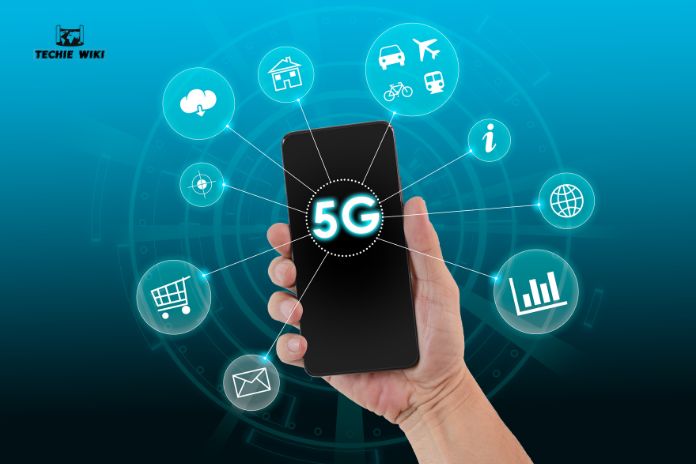
A network that connects everything and allows humans and machines to interact with each other and their environment. It could make the world more connected. Science fiction? For now, we’re borrowing the idea from Dan Simmons’s Ilium-based Todonet. But 5G technology could bring us closer to this vision.
5G means greater connectivity, more stable networks, flexible connections adaptable to the environment, and low latency. It means new ways of connecting objects and interacting with machines that were previously difficult to achieve. 5G technology could support the continued growth of the Internet of Things (IoT). It could support new forms of communication between humans and machines.
How the Relationship Between Humans and Machines Has Evolved
It might seem strange to us today, but until recently, human interaction with machines was relatively limited. For centuries, operating a lever or a pulley was the extent of their contact. Then came industrial machinery, cars, and household appliances. But the relationship between them didn’t improve much.
Until the popularisation of computers in the 1980s and the internet at the end of the 20th century, computer use and digital technologies were still not widespread. Since then, computer use and digital technologies have become increasingly widespread. Since then, today, there are more mobile phone lines than people on the planet. According to the International Telecommunication Union (ITU), around 6 billion people, or 74% of the world’s population, were using the internet in 2025.
Mobile connectivity continues to expand worldwide. According to GSMA data, unique mobile subscriber penetration is projected to reach 71% by 2030, and 5G, IoT, and AI technologies are becoming increasingly central to the mobile ecosystem, offering new ways for people, devices, and digital services to communicate.
How 5G Can Support Connected Devices
5G and the Growth of the Internet of Things
Mobile communication technology has progressed from 1G to 4G and now 5G. With each upgrade, network transmission capacity increased. But 5G introduces changes in network capacity, latency, and connectivity. These are the features of 5G that will change the way we interact with the world.
- Network slicing allows operators to create logical networks for different requirements.
- 5G can support latency of around 1 millisecond in specific conditions.
- 5G is designed to support a higher density of connected devices than previous mobile networks.
- Peak theoretical speeds can reach up to 20 Gbps.
5G adoption continues to expand globally, as reported by the ITU. By 2025, 5G coverage had reached more than half of the global population and one-third of mobile broadband subscriptions; however, availability remains uneven, with significantly greater coverage seen in high-income markets.
What 5G Means for Connected Devices
So what does all this information mean for the relationship between humans and machines? It means that more devices can connect across a wider range of environments; 5G is designed to support a higher density of IoT devices, and lower power requirements can help some connected devices operate longer between battery charges. Meanwhile, low latency, network virtualisation, and high transmission speeds will support faster and more reliable communication in suitable applications.
5G Use Cases: Immersive Technologies, Industry 4.0, and Sensor Networks
Cars talking to each other and communicating with traffic signs and lights. Autonomous buses navigating our cities. Intelligent, real-time management of public services like energy and water. In the ‘5G Use Cases’ report, Ericsson presents numerous scenarios in which 5G technology can support these emerging applications. It also explores three scenarios that could change how people and machines interact.
Immersive Technologies
5G technology can support new applications for virtual and augmented reality, the tactile internet, connectivity for large buildings and smart homes, and immersive entertainment experiences.
Industry 4.0 and Remote Machinery Control
The industrial sector is one of the areas where IoT and 5G have significant potential applications. Remote management of heavy machinery, real-time production control, and factory automation can support Industry 4.0, with the potential to improve efficiency, safety, and competitiveness.
Sensor Networks and Smart Infrastructure
Environmental sensors, whether in cities or the countryside, can support broader use of connected sensor networks. Thanks to sensors with lower power consumption and improved 5G technology, these networks can support the management of the electrical grid, transportation systems, agricultural production, and resource management, thereby enhancing connectivity.
5G Network Deployment and Connected Machines
5G networks are being developed alongside existing 4G-based 5G deployments. 5G networks may employ either non-standalone (NSA) or standalone (SA) architectures. Non-standalone deployments use existing 4G infrastructure alongside 5G technology, whereas 5G SA uses its own dedicated core network. Standalone architecture offers capabilities like network slicing as well as supporting applications with flexible connectivity needs that require lower latency rates; telecom operators are increasingly adopting 5G SA networks as technology matures.
Also Read: How To Increase Internet Speed On Mobile
